TL;DR Damian here. I get asked some version of “should I just get a cordless chainsaw instead of gas” a few times a month, usually...
group
Who This Article Is For
check_circleAnyone interested in boats, motors, or outdoor power equipment
check_circleNorthern Ontario homeowners and outdoor enthusiasts
check_circlePeople comparing products or planning a purchase
TL;DR
Damian here. I get asked some version of “should I just get a cordless chainsaw instead of gas” a few times a month, usually from someone who cuts firewood a couple of times a year, clears storm branches after a windy week, or does the occasional bit of yard cleanup and doesn’t want to deal with mixed fuel, a pull cord, or a carburetor that gums up between uses.
My honest answer is that for a lot of occasional homeowner use, yes, a cordless chainsaw is genuinely enough, and for some jobs it’s actually the better tool. But it isn’t a universal replacement for gas, and the gap shows up in specific, predictable places: bigger trees, longer cutting sessions, and cold weather storage. This article goes through where cordless holds up, where it falls short, and how I’d think about the decision if it were my own yard. I’ll also touch on the everyday differences that don’t show up on a spec sheet, like how much lighter a cordless saw feels overhead and how much less noise it makes, since those matter more than people expect once they’re actually using the thing.
format_quote
“We built this business on one idea: if we take care of people honestly, they will keep coming back. That is not a marketing line. That is how we run the shop every single day.”
CD
Casey Davieaux
Owner, Reyco Marine & Small Engine Ltd.
Who This Article Is For
Homeowners cutting firewood, clearing storm damage, or doing occasional yard work
Anyone comparing a cordless chainsaw against a gas chainsaw for the first time
People who already own a gas saw and are wondering if a cordless one is worth adding
build
Need Professional Service?
Factory-certified technicians. Same-week appointments. We service all brands.
Before I get into bar length and battery runtime, it’s worth being honest about what “occasional use” actually covers, because the answer to “is cordless enough” depends almost entirely on which side of that line your own cutting falls on. I don’t think there’s a hard rule here, but I’ve got a rough mental sketch from years of seeing what people bring through the shop and what they actually use it for. It’s less about how many trees are on the property and more about how many hours the saw is actually running in a typical year, which is a question most people haven’t sat down and answered honestly before they buy.
The kind of jobs I mean
Occasional use, to me, means a handful of sessions a year rather than a handful of sessions a week: limbing a fallen branch after a storm, cutting a downed tree into manageable pieces so it can be hauled away, trimming back growth along a fence line, or working through a modest pile of firewood over a weekend rather than a whole cord in a single sitting. The saw sits in a shed or garage most of the year and comes out for short, specific jobs rather than running for hours at a stretch, day after day. If you had to guess, most of these homeowners would put their total cutting time somewhere under a couple of dozen hours across an entire year, spread out in short bursts rather than long, continuous sessions.
Where the line moves toward gas
If you’re heating your home primarily with wood and processing several cords a season, running a saw most weekends through fall, or regularly dropping trees rather than just cutting up what’s already down, that’s not occasional use anymore, and the calculation shifts. The honest line isn’t about skill or property size, it’s about how many hours the saw actually runs in a season and how much of that running happens in one sitting. A cordless saw that’s genuinely great for two hours of weekend cutting can start to feel limiting once you’re asking it to do that same job five days in a row. I’d rather have that conversation honestly up front than have someone buy the wrong tool for their actual habits and end up frustrated with it by the second season.
This is the part I think gets undersold. A lot of homeowners still picture cordless chainsaws as underpowered novelty tools, and that reputation is out of date for the kind of cutting most occasional users actually do. The category has moved fast over the last several years, and the saws that show up at the shop now are a noticeably different animal than the ones from a decade ago.
Bar length and what it’s actually good for
Most cordless chainsaws aimed at homeowner use run a shorter bar than a typical gas saw, generally landing in a range built for limbing, bucking smaller diameter wood, and general cleanup rather than dropping and processing large trees. I’m deliberately not putting an exact number on that here since it varies by model and by manufacturer, but the general idea holds across the category: a shorter bar is lighter to swing overhead and through awkward angles, and for branches and smaller trunks it’s plenty of saw. Where it starts to matter is once you’re working through trunk diameters that push past what the bar can reach in a single pass, which is a felling and large-tree problem more than a limbing problem. Most cordless models I’ve handled also use a tool-less chain tensioning system, which is a small thing on paper but genuinely convenient when you’re stopping every few cuts to check chain tension, and the saw itself tends to run noticeably lighter than an equivalent gas model, which matters more than people expect once you’re holding it overhead for a stretch.
Chain speed and torque compared to gas
A gas saw generally still has the edge in raw chain speed and sustained torque, particularly under load in dense or larger wood, and that’s not something a battery motor fully closes no matter how the marketing reads. What’s changed is that modern cordless motors have gotten a lot closer for lighter cutting than they used to be. For limbing, brush clearing, and cutting rounds off a downed branch, most homeowners genuinely can’t tell the difference in day-to-day use. The gap reopens once you load the saw down with a big, dense trunk, where a gas engine’s extra torque keeps the chain moving through the cut instead of bogging down. Cordless saws also tend to run quieter and with less vibration than a comparable gas engine, which isn’t a power comparison exactly, but it’s a real, practical difference if you’re cutting near a house early on a weekend or you deal with hand fatigue on longer jobs.
Battery runtime for a typical afternoon
Runtime is the spec people worry about most and, in my experience, the one that matters least for genuinely occasional use. A charged battery, sometimes with a spare on hand, will comfortably get most homeowners through an afternoon of limbing and cleanup without needing a mid-job recharge, and unlike a gas tank running dry, there’s no fuel mixing or restart hassle when you do swap a battery. Where it becomes a real limitation is exactly the “line moves toward gas” scenario above: back-to-back full days of cutting, where recharge time between batteries starts to eat into the workday in a way that stopping for gas simply doesn’t. Most occasional users I talk to end up keeping a second battery on hand as a matter of habit rather than necessity, mostly for peace of mind on a job that runs a little longer than planned, and it’s a reasonable thing to budget for if you go this route.
payments
Monthly Payments That Make Sense
Flexible marine and equipment financing from 60 to 180 months.
I’d rather tell people the honest limits up front than have them find out the hard way halfway through a job. These are the three places I still steer people toward gas without hesitating, and none of them are close calls in my experience.
Felling and bucking larger trees
Dropping a large tree and bucking the trunk into rounds is sustained, heavy-load cutting through dense wood, exactly the condition where a gas engine’s extra torque and a longer bar earn their keep. A cordless saw can technically make some of these cuts, but it’ll work harder to do it, drain faster under that load than it would limbing, and in a bigger diameter trunk you may simply run out of bar reach before you run out of anything else. If felling and processing full trees, not just cutting up what’s already down, is a regular part of your yard work, gas is still the more capable tool for that specific job. I’d also say felling is where experience and the right technique matter more than which saw is in your hands, and a beginner on a gas saw and a beginner on a cordless saw are both better off starting with a smaller job and working up rather than taking on a large tree as a first attempt either way.
All-day cutting and back-to-back tanks vs batteries
For a genuine all-day cutting session, refuelling a gas saw is faster than recharging a battery, and you can carry enough fuel in a jerry can to keep going well past where a couple of spare batteries would run dry. This is really the same “occasional versus regular” line from earlier in the article, just showing up as a hardware limitation instead of a judgment call: if your cutting sessions regularly run long, the tool that refuels in under a minute has a real edge over the one that needs battery cycling. This is also where a helper or a second person on site changes the math a little, since one person can keep cutting while a spare battery charges in a vehicle or a nearby outlet, but for someone working alone through a full day, gas still keeps the saw running with less downtime overall.
Cold weather and battery storage
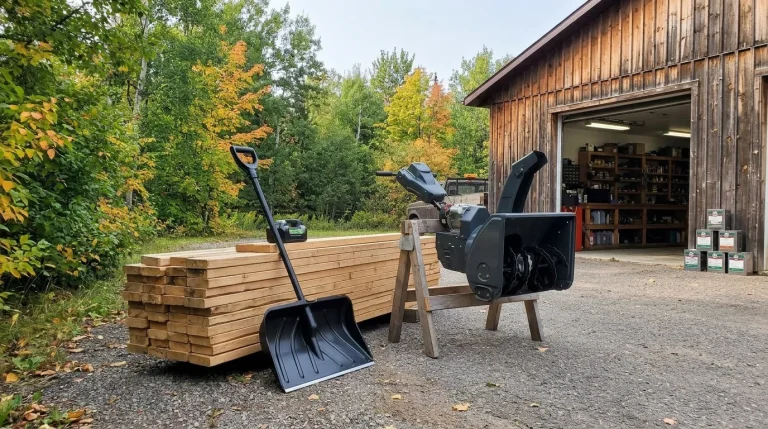
Batteries lose capacity in the cold, and Northern Ontario winters aren’t gentle on them. A cordless saw that gets pulled out for a mid-winter storm cleanup job may run noticeably shorter than it would in warmer weather, and batteries generally need to be stored somewhere temperature-controlled rather than left in an unheated shed or garage over the winter the way a gas saw’s tank can be drained and forgotten about. That’s a real extra step for cordless owners that gas owners don’t have to think about, and it’s worth factoring in if most of your storm or windfall cleanup happens in the colder months. A gas saw isn’t entirely maintenance-free through winter either, since fuel that sits too long can go stale and cause starting problems of its own, but the storage routine is different enough between the two that it’s worth planning for ahead of time rather than discovering the difference the first cold morning you need the saw. The same cold-weather trade-off shows up with other battery-powered yard equipment, and if you’re weighing cordless tools against gas across more than just a chainsaw, our piece on how a cordless snow shovel holds up in Northern Ontario winters is a useful comparison point.
campaign
Don't Miss New Arrivals
Seasonal deals, new inventory, and maintenance tips. No spam.
My Honest Recommendation
If your cutting is genuinely occasional, limbing storm damage, cleaning up brush, processing a modest amount of firewood over a season, and you’d rather skip fuel mixing and pull-cord starts, I think a cordless chainsaw is a completely reasonable, honest choice, and for a lot of homeowners it’ll be the more pleasant saw to actually use. If you’re heating primarily with wood, felling and processing full trees regularly, or routinely running long sessions in cold weather, I’d still point you toward gas, and I wouldn’t try to talk you out of that with a cordless saw that’s going to leave you frustrated halfway through the job. Plenty of homeowners land in between and end up happiest owning both: a cordless saw for the quick jobs that come up without warning, and a gas saw kept for the bigger seasonal work. There’s no wrong answer here, just a mismatch between the tool and the job if you guess wrong on which category your own cutting actually falls into. I’ll also add that weight and noise matter more in this decision than most people budget for going in. If you’re not particularly strong through the shoulders, cut mostly alone, or live somewhere neighbours are close by, the lighter weight and quieter running of a cordless saw is a genuine quality-of-life difference on top of everything above, not just a consolation prize for lower power.
swap_horiz
Your Old Equipment Has Value
We accept trade-ins on boats, motors, trailers, and outdoor power equipment.
If you’re not sure which category your own cutting falls into, or you want to see a cordless saw next to a gas saw in person before deciding, come by and we’ll walk through it with you rather than have you guess from a spec sheet online. We also service and sharpen chainsaws of both kinds, so if a saw you already own isn’t cutting the way it used to, that’s worth a look before you decide it’s time to switch tools entirely. You can [call us](tel:+17052537828) directly or reach out through our contact page. We’re at 705-253-7828, or come by 11 White Oak Drive East, Sault Ste. Marie, P6B 4J7.
format_quote
“We built this business on one idea: if we take care of people honestly, they will keep coming back. That is not a marketing line. That is how we run the shop every single day.”
CD
Casey Davieaux
Owner, Reyco Marine & Small Engine Ltd.
Bottom Line
For genuinely occasional homeowner use, limbing, storm cleanup, and modest firewood work, a cordless chainsaw holds up well and skips the fuel and starting hassles that come with gas. The honest limits show up in three specific places: felling and processing larger trees, sustained all-day cutting sessions, and cold weather runtime and storage. If your cutting stays on the light, occasional side of that line, cordless is enough. If it doesn’t, gas is still the more capable tool for the job, and there’s nothing wrong with owning both.