TL;DR I get calls from Blind River more often than you’d expect for a shop that sits an hour and a half up the highway....
group
Who This Article Is For
check_circleAnyone interested in boats, motors, or outdoor power equipment
check_circleNorthern Ontario homeowners and outdoor enthusiasts
check_circlePeople comparing products or planning a purchase
TL;DR
I get calls from Blind River more often than you’d expect for a shop that sits an hour and a half up the highway. This piece walks through what marine service actually looks like when you’re boating out of the North Channel, what I handle in my own shop day to day, and where I honestly think the drive down to Sault Ste. Marie pays off versus where a good local hand can take care of it just fine.
It’s written for anyone whose boat spends its summer on the North Channel and is trying to figure out where to get outboard work, winterization, or a proper haul-out done without burning a whole weekend on it. I’ll be straight about what’s worth trailering down Highway 17 for and what I’d tell you to leave with someone closer to home.
My honest take is this. For anything past basic maintenance, especially winterization and real diagnostic work on an older outboard, the drive is worth it more often than people assume. But I’m not going to tell a Blind River owner to trailer a boat two hours round trip for something a capable local shop can knock out in an afternoon.
format_quote
“We built this business on one idea: if we take care of people honestly, they will keep coming back. That is not a marketing line. That is how we run the shop every single day.”
CD
Casey Davieaux
Owner, Reyco Marine & Small Engine Ltd.
Who This Article Is For
Anyone interested in boats, motors, or outdoor power equipment
Northern Ontario homeowners and outdoor enthusiasts
People comparing products or planning a purchase
Why Blind River Boaters End Up Talking to Me
Reyco is based in Sault Ste. Marie, not Blind River. I want to say that plainly up front because I’d rather be honest about it than have someone show up expecting a storefront that isn’t there. What we are is a shop offering marine service to the wider Algoma region, and Blind River sits about 90 minutes and roughly 140 kilometres east of us along Highway 17, the Trans-Canada. That distance is exactly why I hear from Blind River owners as often as I do. It’s a manageable drive, not a commitment, and the boating up there gives people plenty of reasons to need me.
The Highway 17 Run
Blind River sits almost exactly halfway between Sault Ste. Marie and Sudbury on Highway 17, which is a detail I bring up because it matters practically. It’s not a detour to get to us, it’s a straight run on a highway a lot of Blind River residents already drive regularly for work, appointments, or errands in either direction. For a boat owner, that means a service trip doesn’t have to be its own separate occasion. I’ve had customers time a drop-off around a day they were already heading toward the Sault for something else, and pick the boat up on the way back through a week or two later. It turns a service trip from a dedicated outing into something that fits around a life that already uses that highway.
North Channel Boating Habits and What I Hear From Owners
The North Channel of Lake Huron is one of the better known cruising and boating areas in this part of Ontario, and Blind River sits right on it. Boats out there tend to get real hours put on them across a season, whether that’s day trips, longer cruising runs, or just steady weekend use on open water. That kind of use is different from a boat that mostly sits at a dock and goes out occasionally. Engines run longer, hulls see more chop, and gear gets exercised more consistently. None of that is a bad thing, it’s exactly what a boat is built for, but it does mean the maintenance conversation with a North Channel owner is usually a bit more grounded in real use than in theory.
Most of the calls I get from up that way follow a pattern that lines up with that kind of use. Someone’s outboard has started running rough partway through the season after steady North Channel use, or they’re calling in the fall wanting to get winterization booked before the weather turns on them, or they’ve got a specific issue they’ve already tried to troubleshoot themselves and want a second opinion. I don’t get a lot of vague “just check it over” calls from Blind River. People up there tend to know their boats and their water, and they call me with a fairly specific problem or a specific job already in mind, which honestly makes the whole process quicker for both of us. We see the same thing out of Goulais River boat owners too, people who know their water and show up with a specific job already in mind rather than a vague once-over.
I want to be specific here rather than vague, because “marine service” can mean a lot of different things depending on who you ask. In my shop, the bulk of what I do for boat owners breaks down into four categories. I’ll go through each one so you know exactly what I’m talking about when I say I can help with your boat.
Outboard Service and Tune-Ups
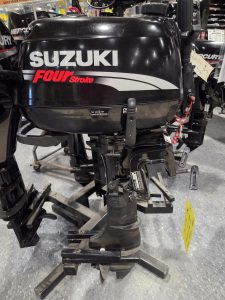
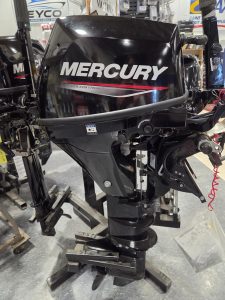
Routine outboard service is the most common work that comes through my bay, and it covers the basics that keep an engine running the way it should. That includes fluid changes, filter changes, spark plug checks, fuel system attention, and a general look at how the motor is running and idling. For a boat that’s been putting on real hours out on the North Channel, staying ahead of routine service is usually cheaper and less stressful than waiting for something to actually fail on the water. I’d rather see a boat for a scheduled tune-up than for a breakdown call.
Winterization and Haul-Out Prep
Winterization is one of the jobs I take most seriously, especially for boats coming from further away. Properly winterizing an outboard means dealing with the fuel system, the cooling system, fogging the cylinders, and making sure nothing is sitting in a state that can freeze and crack over our winter. I see the aftermath of skipped or rushed winterization every spring, and it’s rarely a small fix. If you’re bringing a boat down from Blind River specifically for this, I’d rather do it right the first time than have you dealing with a cracked block come April.
Haul-out prep is closely related and often happens in the same visit, but it’s its own step, covering how the boat comes out of the water and gets set up for storage. That includes things like a proper wash-down, checking the hull and lower unit for anything that happened over the season, and making sure the boat is sitting correctly on its trailer or stands for the months it’ll be parked. A rushed haul-out can hide a problem that would’ve been an easy fix in the fall and turns into a bigger job by spring. I try to use that window to actually look the boat over properly, not just get it out of the water and move on.
General Repair and Diagnostics
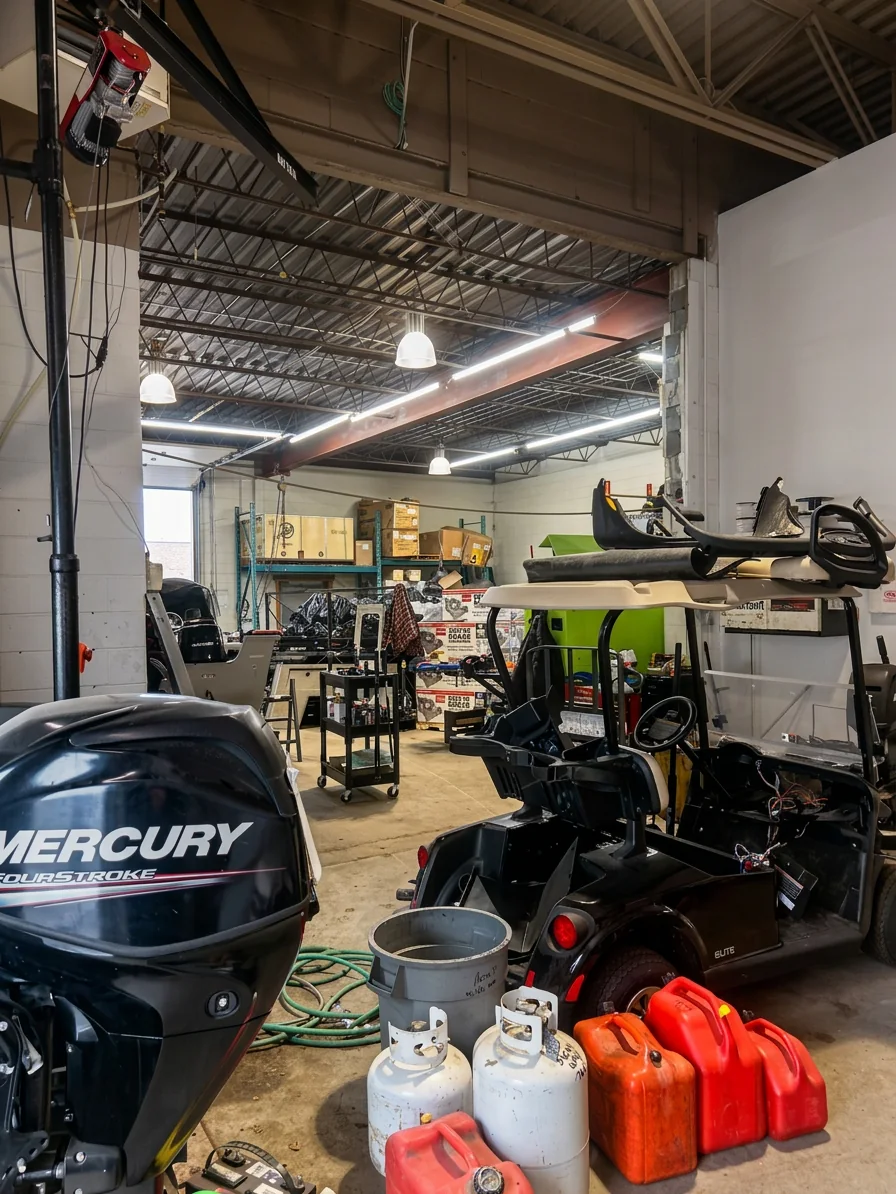
Beyond scheduled service, I handle general repair and diagnostic work, which is usually where the “something’s not right and I can’t figure out why” calls land. That could be an outboard that’s hard to start, running rough, losing power, or throwing a code if it’s got the electronics for one. Diagnostic work benefits from a proper shop environment where I can actually test things under controlled conditions rather than guessing dockside. This is often the category where the drive down genuinely pays off, because a real diagnosis usually needs more than a quick look. It’s the same checks we run on boat repair jobs here in the Sault, just applied to something that trailered in from farther up the highway.
payments
Monthly Payments That Make Sense
Flexible marine and equipment financing from 60 to 180 months.
This is the question I actually get asked the most, more than any specific service question, and it deserves a straight answer rather than a sales pitch. Ninety minutes each way is real time and real distance, and I don’t think every job justifies it. What I try to do is help people sort out which jobs are worth the trip and which ones aren’t, based on what I actually see come through my shop.
What’s Worth Bringing In and What a Local Shop Can Handle
Winterization, thorough haul-out prep, and any real diagnostic or repair work are the jobs I think are worth the drive most consistently. These are the categories where having the boat in a proper shop, with the right tools and the time to do the job carefully, makes a genuine difference in the outcome. If an outboard is running rough and a couple of easy fixes haven’t solved it, or if it’s time for winterization and you want it done thoroughly rather than quickly, those are the trips I’d tell you to make.
On the other hand, there’s plenty that a capable local marina or shop around Blind River and the North Channel can genuinely handle well, and I’m not going to pretend otherwise. Basic checks, simple fixes, routine dockside maintenance, and anything that doesn’t need a full shop setup are usually fine to keep local. I’d rather be honest that the drive isn’t always necessary than have someone make an unnecessary trip because they assumed further away automatically means better.
How Drop-Off and Pickup Actually Work
For customers coming from Blind River, the usual pattern is a call ahead to talk through what’s going on and roughly how long the job will take, then a trailer drop-off at our location on White Oak Drive East here in Sault Ste. Marie. From there I work through the job and give a call when it’s ready. Some customers time the pickup around another trip they’ve already got planned along Highway 17, which, given the route runs straight between the two towns, tends to work out well. Calling ahead before you make the drive is the one thing I’d always recommend, just so we’re not guessing at timing on either end.
campaign
Don't Miss New Arrivals
Seasonal deals, new inventory, and maintenance tips. No spam.
Timing It Around the North Channel Season
Timing matters more for a Blind River trip than it does for a local customer, simply because of the extra planning involved in coordinating a drive. I try to help people plan around the two windows that matter most for North Channel boating, spring get-ready and fall haul-out, so the drive lines up with when the work actually needs doing rather than becoming a last-minute scramble.
Spring Get-Ready and Fall Haul-Out
Spring is when boats come out of storage and need to be checked over before they go back on the North Channel for the season. That’s a good time to catch anything that happened over the winter, get fluids and filters fresh, and make sure the outboard is running the way it should before the season’s real hours start piling on. Booking this early, before the weather really turns and everyone else has the same idea, tends to make the whole process smoother and gives more flexibility around timing the drive.
Fall is the busier of the two windows for me, because it’s when winterization and haul-out prep both need to happen before the cold sets in properly. I’d rather see a Blind River boat a little earlier in the fall than have someone racing an early freeze to get the drive in. Booking ahead gives both of us room to do the job properly instead of rushing it because the weather forced the timeline.
swap_horiz
Your Old Equipment Has Value
We accept trade-ins on boats, motors, trailers, and outdoor power equipment.
If you’re up around Blind River and dealing with an outboard that isn’t running right, or you’re thinking ahead to winterization before the season turns, give me a call and we’ll talk through what you’re seeing. I can usually get a sense of what’s going on over the phone and let you know honestly whether it’s worth the drive or something a local hand can handle. If it does make sense to bring it in, we’ll sort out a drop-off time that works around your schedule and the drive down Highway 17.
You can reach us at 705-253-7828, or bring the boat by at 11 White Oak Drive East, Sault Ste. Marie, P6B 4J7. Calling ahead is always the best first step so we’re not guessing at timing on either end.
format_quote
“We built this business on one idea: if we take care of people honestly, they will keep coming back. That is not a marketing line. That is how we run the shop every single day.”
CD
Casey Davieaux
Owner, Reyco Marine & Small Engine Ltd.
Bottom Line
Being an hour and a half up the highway from Blind River doesn’t have to mean being out of reach. I handle real outboard service, proper winterization, thorough haul-out prep, and genuine diagnostic work every season for boats that spend their summers on the North Channel, and I’d rather tell you honestly which of those are worth the drive than oversell the trip for jobs a local shop can handle just as well. Call ahead, and we’ll figure out together what makes sense for your boat.