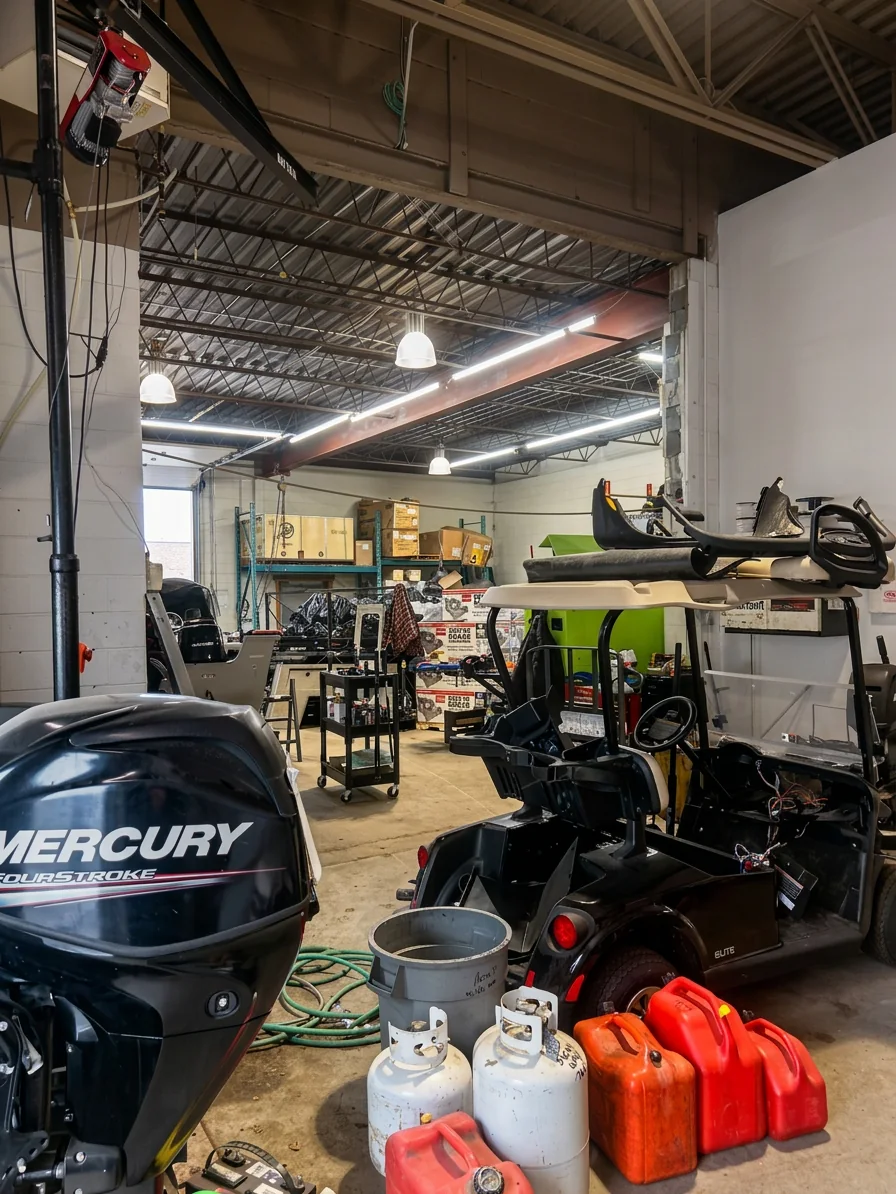
Hi, I’m Cody, one of the technicians here at Reyco Marine in Sault Ste. Marie. I pull outboards apart and put them back together for a living, so when a customer asks me what to watch for before launch day, I have a pretty clear list in my head. What follows is that list, written out so you can do a walk-around before you book anything or, better yet, before you tow the boat to the ramp.
TL;DR
If your outboard is showing hard starts, rough idle, smoke, a temperature warning, gear trouble, or a fuel smell before launch, those signs each point to something specific I can diagnose on the lift before it gets expensive. Fuel and ignition issues are the most common and cheapest to fix, while a fuel smell is always a same-day inspection with no exceptions. Northern Ontario winters are hard on outboards, and a spring commissioning at Reyco is how you catch problems while they are still small. - Cody, Technician, Reyco Marine
group
Who This Article Is For
- check_circle Anyone interested in boats, motors, or outdoor power equipment
- check_circle Northern Ontario homeowners and outdoor enthusiasts
- check_circle People comparing products or planning a purchase
format_quote
“We built this business on one idea: if we take care of people honestly, they will keep coming back. That is not a marketing line. That is how we run the shop every single day.”
CD
Casey Davieaux
Owner, Reyco Marine & Small Engine Ltd.
7 Signs Your Outboard Motor Is Telling You It Needs Attention This Spring
Northern Ontario winters are rough on marine equipment. Six months of cold storage, temperature swings, and fuel sitting in the system will absolutely change what you find when you try to start an outboard in spring. Some issues show up on the first crank. Others only surface two kilometres from the dock, at the worst possible moment. These are the seven things I watch for.
1. The Engine Cranks But Won’t Catch, or Starts and Immediately Stalls
Gasoline left in a carburettor over winter breaks down and leaves varnish in the passages and jets. If the fuel was not stabilised before storage, this is especially likely. The engine may eventually start but will run rough or stall under load. On fuel-injected Mercury outboards, degraded fuel causes injector fouling that shows up as rough idle and inconsistent throttle response rather than a clean no-start.
2. Rough Idle That Does Not Clear After Warmup
An outboard that idles unevenly at low RPM and then stumbles at cruise speed is usually dealing with fouled spark plugs or a fuel delivery issue. Spark plugs that sat all winter, especially if the engine was stored without fogging oil, reach the end of their service interval faster than you might expect. This one is cheap to fix at a service appointment and expensive to ignore on the water.
3. White Smoke That Continues After the Engine Has Warmed Up
A little white smoke on the first start of the season is normal. That is condensation burning off. White smoke that continues after the engine reaches operating temperature is a different conversation. It points to water in the combustion chamber from a head gasket issue, a cooling system problem, or water intrusion during storage. Aaron Barbarie flagged one of these last spring that looked like a minor idle problem on the dock but turned out to be a cracked head. Catch it early.
4. Blue Smoke at Operating Temperature
Blue smoke means oil is burning. On a four-stroke outboard, a puff of blue on cold start that clears out quickly can be valve seal wear. Blue smoke that persists after the engine has warmed up is more serious and warrants a proper inspection before the motor goes back in service.
5. The Temperature Warning Horn Fires
Mercury outboards have a temperature warning horn that triggers before the engine reaches critical temperature. If that horn fired any time you ran the motor recently, the cooling system needs attention before the engine operates again. The most common cause is water pump impeller failure. The impeller is a rubber component that degrades over time. A partially deteriorated impeller still moves water, just not enough of it, which can push operating temperature up without triggering the horn right away. An outboard that has not had an impeller replacement in two or more seasons should have the water pump inspected. An impeller that fails on the water causes an overheat in minutes.
6. Grinding or Slipping When You Shift Into Gear
Difficulty engaging forward or reverse, grinding on the shift, or slipping between gears points to either the lower unit or the shift linkage. After a winter of non-use, shift cables can stiffen or stretch, and that is often correctable with an adjustment or cable swap. Lower unit gear problems are more serious. If the linkage is fine but the gears are not engaging cleanly, the lower unit needs service before the engine takes any load. Running an outboard under that condition turns a manageable repair into a much larger one.
7. A Fuel Smell at Idle or After Shutdown
Fuel lines develop cracks and brittleness over time, and a winter of temperature variation speeds that up. A cracked fuel line that is not leaking at rest may weep at operating pressure. The primer bulb degrades the same way and is a common source of fuel smell on older setups. A fuel smell on a boat is a fire risk, not a nuisance. Track down the source before the motor runs again.

build
phone (705) 253-7828 Need Professional Service?
Factory-certified technicians. Same-week appointments. We service all brands.
What a Pre-Season Service Actually Covers at Reyco Marine
A spring commissioning at Reyco Marine on White Oak Drive addresses all seven issues above in a systematic way. It is not just a visual check.
The fuel system is tested under pressure. Spark plugs are pulled and evaluated, not just looked at from the outside. The water pump impeller is inspected and replaced on schedule. Lower unit gear oil is drained and checked for metallic particles or water contamination. The engine runs on muffs before the boat goes anywhere near the water.
The difference between doing this at an authorised service centre versus waiting is simple. Problems caught on a lift cost a fraction of what they cost after a breakdown on Georgian Bay or Lake Superior. Casey Davieaux built Reyco around that idea. Get it right before launch, not after.
To book a marine service appointment, call us at 705-253-7828 or visit our Marine Service page on reycomarine.com to see what is included and to request a time.
inventory_2 Related Products
Browse All arrow_forward



Why Northern Ontario Outboards Take a Harder Hit Than Most
Lake Superior does not forgive a poorly maintained motor. Water temperatures here are cold well into June. That gap between air temperature and water temperature puts real thermal stress on cooling systems and seals that have been sitting all winter.
On top of that, most Northern Ontario boaters run a compressed season: May through September at best. That means every service interval gets crammed into fewer operating hours, and an impeller or a set of spark plugs that might last two seasons in a warmer climate gets asked to perform at full capacity right out of storage.
Ron in our parts department can pull the service history on your motor if you have had work done here before. If you bought the motor elsewhere and are not sure of the maintenance record, we treat it as starting fresh, which is the right call.

payments
calculate Calculate PaymentsMonthly Payments That Make Sense
Flexible marine and equipment financing from 60 to 180 months.
Connecting Your Outboard Symptoms to a Service Priority
Not every symptom on the list above means you are looking at a major repair. Some of it is straightforward maintenance that gets overlooked. Here is how I think about triage when a customer comes in:
Start-up and idle issues almost always trace back to fuel and ignition. That is the cheapest area to address and the most common. Smoke symptoms need a proper diagnosis because the cause range is wide. Gear and shift problems need hands on the motor before anyone guesses. A fuel smell is always a same-day inspection, no exceptions.
Lynn at the parts counter can get you pricing on common wear items like impellers, spark plugs, and fuel lines if you want to have the conversation before you commit to a full service visit. Give us a call at 705-253-7828 and ask for Lynn or for the service desk.

campaign
Don't Miss New Arrivals
Seasonal deals, new inventory, and maintenance tips. No spam.
What to Bring When You Drop Off the Motor
A little preparation before you drop off saves everyone time. If you have any service records, bring them. If you know roughly how many hours are on the motor, write that down. If you noticed a specific symptom, describe exactly when it happens: cold start, at idle, under load, when shifting.
The more specific you are, the faster Damian or Lee can isolate what needs attention and get you back on the water. Vague descriptions like “it runs funny” are a starting point, but “it sputters between 1500 and 2000 RPM when I accelerate from idle” cuts the diagnosis time in half.
For a full breakdown of what spring commissioning covers from start to finish, read our spring commissioning checklist at reycomarine.com. That post walks through every step we run through in the shop.
swap_horiz
request_quote Get Trade-In ValueYour Old Equipment Has Value
We accept trade-ins on boats, motors, trailers, and outdoor power equipment.
Get it looked at
- Book outboard service
- Mercury outboard service
- Not sure what it needs? Ask us for a quote
- Call the shop: 705-253-7828
- Find us, hours and directions: Reyco Marine on Google
- Related reading: Mercury outboard service schedule · Outboard tune-up in the Sault