TL;DR I work on boats from all over the Algoma region, and Thessalon owners are a regular part of that mix. Thessalon sits on Highway...
group
Who This Article Is For
check_circleAnyone interested in boats, motors, or outdoor power equipment
check_circleNorthern Ontario homeowners and outdoor enthusiasts
check_circlePeople comparing products or planning a purchase
TL;DR
I work on boats from all over the Algoma region, and Thessalon owners are a regular part of that mix. Thessalon sits on Highway 17 where it meets Highway 129, right on the north shore of Lake Huron, and I know that’s about an hour’s drive west to reach us in Sault Ste. Marie. I don’t take that trip lightly, so I want this article to actually earn it.
What follows is a straight rundown of the marine service work I do most often ahead of haul-out season: outboard diagnostics and repair, winterization, and general boat repair that doesn’t fall neatly into either category. I’ve also included the honest version of the drop-off conversation, because I’d rather you know what to expect before you load the trailer than find out halfway down Highway 17.
This is marine work specifically. If you’re looking for small-engine service in Thessalon, that’s covered in a separate article, this one is boats, motors, and everything that keeps them running through another Lake Huron season.
format_quote
“We built this business on one idea: if we take care of people honestly, they will keep coming back. That is not a marketing line. That is how we run the shop every single day.”
CD
Casey Davieaux
Owner, Reyco Marine & Small Engine Ltd.
Who This Article Is For
I wrote this for anyone trying to figure out what marine service actually involves before committing to the drive, whether you already own a boat or you’re still weighing what ownership on Lake Huron looks like. It’s not a sales pitch, it’s the same explanation I’d give someone standing at my counter.
Anyone interested in boats, motors, or outdoor power equipment
Northern Ontario homeowners and outdoor enthusiasts
People comparing products or planning a purchase
build
Need Professional Service?
Factory-certified technicians. Same-week appointments. We service all brands.
When someone from Thessalon calls asking about “marine service,” I usually ask them to tell me what’s actually going on with the boat, because that word covers a lot of ground in my shop. It can mean anything from a motor that won’t idle right to a full winterization before the boat goes into storage for the season. I’ve broken down the three categories I see most often below, because knowing which bucket your issue falls into helps you tell me what you need when you call, and it helps me tell you roughly what to expect once the boat is on my bench or lift.
Outboard Service and Diagnostics
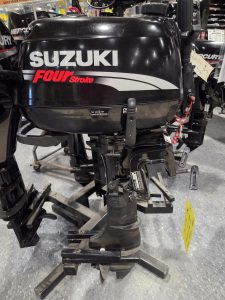
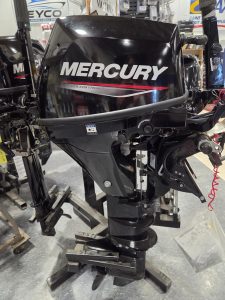
Outboards are where most of my marine work starts, and for good reason, they’re the part of the boat doing the most mechanical work every time you’re on the water. When an outboard comes in, I’m looking at compression, fuel delivery, ignition timing, and the cooling system, because a rough-running motor is almost always one of those four things acting up, sometimes more than one at once. Ethanol-blended fuel sitting in a tank over winter is one of the more common culprits I see up here, it breaks down and gums up carburetors and fuel lines in a way that makes a motor hard to start or rough at idle even though nothing mechanical has actually failed.
I also do the more routine side of outboard care: oil changes on four-stroke motors, gear lube changes in the lower unit, spark plug replacement, and impeller checks on the water pump, since a worn impeller is one of the more common reasons a motor overheats without any obvious warning first. None of this is glamorous work, but it’s the kind that determines whether your motor starts on the first pull in June or sits there clicking while everyone else on the dock is already out on the water.
Winterization
Winterization is the piece of marine service that actually protects your investment through an Algoma winter, and it’s not something I’d recommend skipping regardless of how mild the fall feels. The core of the job is getting water out of the engine block and cooling passages, since water left sitting in there through a hard freeze expands and can crack a block or damage the lower unit in ways that are far more involved to repair than the winterization itself would have cost you.
Beyond the cooling system, I’m running fuel stabilizer through the tank and fuel lines so the fuel doesn’t break down and gum up the system over the months the boat sits, fogging the cylinders to protect against internal corrosion, and changing the gear lube in the lower unit since water intrusion there is common and easy to miss until spring. I also check the battery and disconnect it for storage, because a battery left connected through a Northern Ontario winter rarely survives it in good shape. If you’re bringing a boat in from Thessalon for this, timing it before the first hard freeze matters more than the exact calendar date.
General Boat Repair
Not everything fits neatly into “outboard” or “winterization,” and that’s where general repair comes in. This is the catch-all for steering system issues, trim and tilt problems, electrical faults, livewell or bilge pump troubleshooting, and hull hardware that’s worked loose or started leaking. It’s also where I handle the stuff that shows up unexpectedly, a fuel line that’s cracked from age, a battery switch that’s corroded and stopped making good contact, a trailer light that’s shorted out on the drive down.
The honest answer with general repair is that I can’t always diagnose it over the phone, and I’d rather tell you that upfront than guess and have you make the drive for nothing. What I can do is ask enough questions on the call to get a sense of whether it’s something quick or something that needs the boat on the lift for a proper look, and that conversation is worth having before you commit to the trip from Thessalon.
I want to be straightforward about where Reyco actually sits, because I think that honesty matters more than sounding like we’re everywhere. Our shop is at 11 White Oak Drive East in Sault Ste. Marie, that’s our only location, we don’t have a branch or drop-off point in Thessalon itself. What we do have is a service base that draws boat owners from across the wider Algoma region, and Thessalon is a regular part of that.
Where Thessalon Sits on the Map
Thessalon sits on Highway 17, the Trans-Canada, right at its junction with Highway 129, on the north shore of Lake Huron. From there it’s roughly 80 to 92 kilometres, call it around an hour’s drive, west along Highway 17 to reach us in Sault Ste. Marie. That’s a real number I can stand behind, not a rounded-down marketing figure, because I’d rather you plan the trip accurately than show up expecting something shorter.
I bring this up because I think geography should be part of an honest conversation about service, not something glossed over. A lot of the boats I see from that stretch of the north shore spend their season on Lake Huron itself or on the connecting waters nearby, which means they’re dealing with the same big-water conditions, wind, chop, and cold-water temperatures even in summer, that our own local boats deal with around Sault Ste. Marie. The mechanical stresses on an outboard don’t change much between the two areas, so the service needs generally look similar. In practice, it’s the same checks we run in the Sault, just carried out on a boat that made the drive up Highway 17 to get there. What changes is simply the logistics of getting the boat to where the work happens, and that’s the part I want to be upfront about rather than downplay.
Why the Drive Makes Sense for Some Jobs and Not Others
An hour each way is worth thinking through honestly rather than assuming it’s automatically worth it. For a full winterization, a diagnostic that needs real shop time, or a repair involving parts I need on hand, bringing the boat to us usually makes sense, because you’re getting the work done properly in one trip rather than making multiple runs back and forth. For something quick, a fuel filter here, a battery terminal there, it might genuinely be more practical to handle it locally if you’ve got a way to, and I’d rather say that plainly than have you drive an hour for a five-minute fix. It’s the same trade-off I’d point out to boat owners weighing Goulais River boat service against making the trip in, the math changes with the size of the job, not the distance.
Where the calculation tips back in favour of the trip is anything seasonal or anything you want done once and done right before the boat sits for months. Winterization is the clearest example, since a mistake there doesn’t show up until spring, and by then it’s a much bigger repair than the winterization would have been. The same goes for a diagnostic on a motor that’s running rough, chasing an intermittent issue with the wrong tools or without the right reference torque and timing specs on hand tends to turn a one-visit fix into several. I’d rather you make one trip and leave with the job actually finished than make three shorter ones chasing the same problem.
payments
Monthly Payments That Make Sense
Flexible marine and equipment financing from 60 to 180 months.
If you’ve decided the trip makes sense, the logistics matter as much as the mechanical work itself, especially with an hour of driving on either end. I want the day you bring the boat in to be as painless as the fix I’m doing on it, and most of that comes down to a bit of planning before you ever hook up the trailer.
Booking Ahead, Especially in Fall
Fall is our busiest stretch for winterization, and if you’re coming from Thessalon I’d strongly encourage calling ahead rather than showing up unannounced. Booking a window in advance means I can have the bay and parts ready when you arrive instead of you making the drive only to find we need a day or two to get to it. It also lets me ask a few questions upfront about what you’re bringing in, so if there’s anything unusual about the boat or motor, I already know before it’s on the lift.
This matters more the later into fall you wait, since everyone with a boat on the north shore is thinking about winterization around the same time, usually once the mornings start turning cold and the season’s clearly winding down. If you call in September rather than late October, I’ve got more flexibility to slot you in on a day that works for a longer trip, and less chance you’re racing a hard freeze while your boat is still on my schedule. I’d genuinely rather hear from you earlier than have you worry about timing it perfectly.
What to Bring and What to Expect on Arrival
When you bring a boat in from out of town, a little preparation saves everyone time. I always ask that the boat come in with a full or nearly full fuel tank if it’s going in for winterization, since stabilizer needs fuel to actually protect the system, and I like to hear about anything you’ve already noticed that’s off, a smell, a noise, a warning light, anything that gives me a head start on the diagnosis. If it’s a drop-off rather than a wait-while-we-look job, we’ll talk through a rough timeline before you head back up Highway 17, so you’re not left wondering when to make the return trip.
I’d also suggest bringing along anything you know about the motor’s history if you have it, prior repairs, whether it’s had consistent maintenance, roughly how the boat’s been stored in past winters. None of that is required, but it helps me understand what I’m looking at faster, which matters more when you’ve made a real drive to get here. And if timing works out that you’d rather wait on-site for something quick rather than make two trips, just mention that when you call so I can plan the day around it.
campaign
Don't Miss New Arrivals
Seasonal deals, new inventory, and maintenance tips. No spam.
Need Professional Service?
If you’re in Thessalon or anywhere else in the Algoma region and your boat needs outboard work, winterization, or a repair you can’t quite pin down, give me a call and we’ll talk through it. I’ll ask the questions I need to ask to get a sense of what’s going on before you commit to the drive, and I’ll be straight with you about timing, especially heading into the fall rush when everyone’s thinking about the same seasonal work at once.
I’m not going to tell you every job is worth an hour on Highway 17, because some aren’t, and I’d rather earn the trip than assume it. What I can promise is a real conversation on the phone first, so you’re making that drive with a clear idea of what’s going to happen once you’re here, not a guess.
Marine service covers a lot of ground, outboard diagnostics, winterization, and the general repair work that doesn’t fit either label neatly, and I handle all of it out of our Sault Ste. Marie shop. I know an hour’s drive from Thessalon isn’t nothing, so I try to make sure the trip is worth it every time, with a straight answer on the phone, a clear sense of timing, and work that holds up through another season on Lake Huron.
I’d rather you call ahead before the fall rush hits its peak and tell me what you’re seeing or what you’re due for, so we can figure out the right plan together, whether that’s a full winterization booking, a diagnostic appointment, or just a conversation about whether the trip makes sense for what you need done.