TL;DR I get asked about downrigger weight more than almost anything else at the bench once trolling season gets going, usually from someone standing there...
group
Who This Article Is For
check_circleAnyone interested in boats, motors, or outdoor power equipment
check_circleNorthern Ontario homeowners and outdoor enthusiasts
check_circlePeople comparing products or planning a purchase
TL;DR
I get asked about downrigger weight more than almost anything else at the bench once trolling season gets going, usually from someone standing there holding a ball that either came with a boat or got picked up secondhand, wondering if it is actually the right one for what they are fishing. The honest answer is that weight sizing is not one number that works everywhere. It depends on how fast the boat is moving, how much line is out, whether there is current pulling on the ball, and how deep the fish are sitting that day.
What I try to get across is that a weight that feels heavy enough sitting in the shop can turn out badly undersized the moment it is trolling at speed with a real length of cable out behind it. Blow-back, current, and drop time all fight against the ball in different ways, and the shape of the weight matters just as much as how many pounds it carries. I will walk through how I think about sizing, why shape changes the equation, and what changes once the water is Lake Superior, the St. Marys River, or the North Channel instead of a calm inland lake.
Cody, works the marine/ATV bench at Reyco Marine
format_quote
“We built this business on one idea: if we take care of people honestly, they will keep coming back. That is not a marketing line. That is how we run the shop every single day.”
CD
Casey Davieaux
Owner, Reyco Marine & Small Engine Ltd.
Who This Article Is For
Anyone interested in boats, motors, or outdoor power equipment
Northern Ontario homeowners and outdoor enthusiasts
People comparing products or planning a purchase
Matching Downrigger Weight to Trolling Depth
The core problem a downrigger weight is solving is simple to state and less simple to get right in practice. I want the ball to pull the line straight down to a set depth and hold it there, but the moment the boat is moving and current is doing anything at all, the water pushes back against that ball and drags it up and behind where I actually want it. A heavier weight resists that push better than a lighter one, which is the whole reason weight selection matters instead of just grabbing whatever ball happens to be on the reel.
I think about three things together rather than any one in isolation: how fast I am trolling, how much line I have let back, and how deep I actually want to fish. Get any one of those wrong and the ball ends up somewhere other than where the counter says it is, which is frustrating when a person is trying to work a specific depth where marks are showing on the sonar.
Trolling Speed and Blow-Back
Blow-back is the term I use for the ball rising up and trailing behind the boat instead of running straight down under it, and speed is the single biggest driver of how much of it happens. A ball that tracks nearly straight down at a slow crawl can swing back a noticeable distance once the boat picks up to a faster trolling speed, because the water resistance against the ball and the cable both increase as speed goes up.
This is exactly why the same weight can feel right one day and wrong the next. Someone trolling slow for lake trout with a light ball gets away with it, then speeds up to run a spread for a different species and finds the ball is suddenly nowhere near the depth the counter claims. A heavier weight cuts through that resistance and keeps the ball closer to vertical at a given speed, which is the main lever I reach for when someone tells me their presentation keeps riding higher than expected.
I do not hand out a fixed number for how much blow-back to expect at a given speed, because boat, cable diameter, and current all change the equation enough that a table would be more misleading than helpful. What I do tell people is to expect more blow-back the faster they go and the more line they have out, and to size up rather than fight it with technique alone.
Depth Range and Letback
Letback is how much cable is out between the boat and the ball, and it takes more letback to reach a given depth than the raw number on the counter would suggest, because the cable is running at an angle rather than straight down once there is any blow-back at all. A heavier ball straightens that angle out somewhat, which means less letback is needed to reach the same actual depth compared with a lighter ball fighting the same conditions.
Anglers up here generally reach for lighter balls for shallow, slow presentations and step up in weight as the target depth and trolling speed both increase, which lines up with how most tackle shops and downrigger manufacturers talk about it in their own general guidance. I am deliberately not giving an exact pound-per-foot conversion here, because it shifts with cable type, ball shape, and current, and a number that looks precise but is not accurate does more harm than a general rule that holds up across conditions. We carry a full range of downrigger weights in various shapes and pound ratings if it is time to size up.
Reading the Depth Counter
Every downrigger has some kind of depth counter or dial, and the number it shows is the amount of cable out, not necessarily the true depth of the ball once blow-back is accounted for. I have had plenty of conversations at the counter where someone insists their downrigger dial must be broken because the fish marks on the sonar do not line up with what the counter reads, and in most of those cases the counter is working fine and the ball is simply riding higher than the dial suggests because of speed and weight.
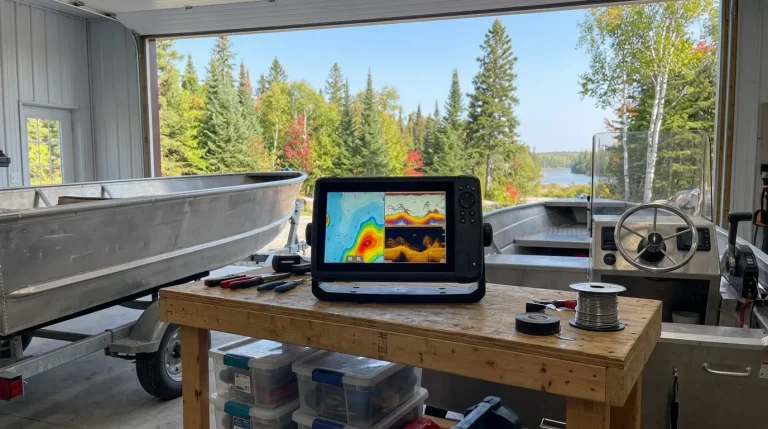
A heavier weight closes that gap because it holds truer to vertical, so the counter reading gets closer to actual depth. My general practice is to check the ball’s true position against the sonar screen once it is in the water and settled at trolling speed, rather than trusting the counter number alone, especially on a day with wind or current working against the boat.
Pounds are only half of the sizing question. The shape of the weight changes how it behaves in the water almost as much as how heavy it is, and I see people size up in weight to fix a problem that a different shape would have solved on its own, sometimes without adding any weight at all. I generally group weights into three shape families when I am talking someone through options.
Round Cannonball Weights
The round cannonball is the classic shape most people picture when they think of a downrigger weight, and it has stuck around because it is simple, inexpensive relative to shaped weights, and easy to find in a wide range of sizes. It drops reasonably well and works fine for straightforward trolling at moderate speeds.
Where the round shape falls behind is blow-back and spin. A sphere does not cut through water as cleanly as a shaped weight, so it tends to blow back more at a given speed and pound-for-pound weight compared with a streamlined design. It can also spin or swing under some conditions, which translates into line twist over a day of fishing. For slower, simpler presentations it is a perfectly reasonable choice, and a lot of anglers up here run them without issue.
Torpedo and Fish-Shaped Weights
Torpedo and fish-shaped weights are built with a nose that cuts through the water rather than pushing straight against it, and that shape difference shows up directly in performance. For a given weight, a streamlined ball tracks closer to vertical at speed than a round one does, which means less blow-back and a truer depth reading off the counter.
The tradeoff is usually cost, since a shaped weight typically runs more than a plain round ball of the same weight, and some shapes are a bit more particular about which clip or release style pairs with them cleanly. For anyone trolling faster presentations, working current, or fishing deeper water where every bit of blow-back adds up, I think the extra cost of a shaped weight is money well spent on the water rather than in the shop drawer. If you are also weighing which downrigger unit to run, our comparison of Cannon downriggers against other brands covers clip and release differences in more detail.
Fin and Keel-Stabilized Weights
Some weights add a fin or keel along the body specifically to stop spin and swing rather than to change drop speed or blow-back on their own. I bring these up separately because they solve a different complaint than the other two shapes. If someone tells me their line keeps twisting or their ball seems to wander side to side rather than just riding high, a fin or keel-stabilized design is usually the fix, independent of whether they also need to size up in raw weight.
These stabilized shapes pair well with either a round or torpedo body depending on the specific product, so it is worth thinking about stability and blow-back as two separate questions rather than assuming one weight has to solve both. I have had customers add a stabilized fin weight and keep their existing pound rating, and the line twist problem cleared up without touching the depth performance they already had dialed in.
payments
Monthly Payments That Make Sense
Flexible marine and equipment financing from 60 to 180 months.
Everything I have covered so far changes once the water underneath the boat changes, and up here that is not a small variable. Lake Superior, the St. Marys River, and the North Channel are three very different bodies of water within a short drive of each other, and I size weight differently depending on which one someone is heading out on. Wind fetch, current, and depth all shift the calculation, sometimes within the same afternoon.
Lake Superior Open Water
Superior builds wind chop fast and holds genuinely deep, cold basins that many inland lakes never come close to. Wind against a long fetch pushes real current at the surface even on a day that looks calm from shore, and that surface push works against the downrigger ball the same way boat speed does, adding to blow-back rather than reducing it.
Because of that combination, I generally point people toward a heavier ball and a shaped design when they are fishing Superior compared to a sheltered inland lake, especially if they are trying to hold a specific deep zone where lake trout are sitting. A weight that handled a calm bay just fine can ride noticeably higher on Superior once wind and wave action are added into the mix, so I would rather see someone slightly over-weighted than fighting blow-back all afternoon. For more on how we rig Cannon downriggers for Lake Superior conditions, see our dedicated write-up.
St. Marys River Current
The St. Marys River is a genuinely different animal from a lake, because there is real, persistent current running through it on top of whatever the boat is doing under its own power. That current adds to or fights against the boat’s speed depending on direction of travel, and it pulls on the ball and cable the entire time it is in the water, not just while the boat is moving forward.
I tell people fishing the river to expect to run heavier than they would on still water for the same depth, since the current is effectively adding to whatever blow-back the boat speed alone would cause. It is also worth checking the ball’s actual position against the sonar more often here than on a calm lake, since current can shift through a session as flow changes, and a weight that was tracking true an hour ago may not be anymore.
North Channel and Sheltered Bays
The North Channel and the sheltered bays around it tend to run calmer and shallower than open Superior, with less wind fetch and generally gentler current. That is exactly the kind of water where a lighter weight and a simpler round ball are often perfectly adequate, since there is less blow-back to fight in the first place.
I still tell people to watch for the transition zones, the points and channel mouths where sheltered water opens up toward Superior or where current funnels through a narrower passage, since conditions can change quickly in those spots even within a short run. Sizing for the calmest water in the trip and getting caught by a rougher stretch partway through is a common enough surprise that I always suggest carrying at least one heavier ball as a backup rather than assuming the whole day will match the marina conditions.
campaign
Don't Miss New Arrivals
Seasonal deals, new inventory, and maintenance tips. No spam.
Need Professional Service?
If any of this has someone second-guessing what is currently on their downrigger, I am happy to talk through it at the bench. Bring in the ball, the cable, and even a rough idea of the depths and speeds being fished, and I can walk through whether the shape and weight on hand actually match the conditions being run, or whether a shaped weight or a stabilized fin would solve a specific complaint like line twist or a counter that never seems to match the sonar. Reach the shop at 705-253-7828, or stop by 11 White Oak Drive East, Sault Ste. Marie, P6B 4J7.
swap_horiz
Your Old Equipment Has Value
We accept trade-ins on boats, motors, trailers, and outdoor power equipment.
Downrigger weight sizing comes down to matching pounds and shape to speed, letback, and whatever current is actually working against the ball that day. A round cannonball is a fine, simple choice for calm, slower trolling, a torpedo or fish-shaped weight earns its keep once speed or depth increase, and a fin or keel-stabilized design solves spin and line twist specifically. Superior, the St. Marys River, and the North Channel are close together on a map but ask for different answers, and the safest habit I know is checking the ball’s real position against the sonar rather than trusting the counter dial alone.
Cody, marine and ATV bench at Reyco Marine, Sault Ste. Marie.