TL;DR People ask me about Wave Armor almost every time a customer walks in wanting to replace an old dock instead of patching it for...
group
Who This Article Is For
check_circleAnyone interested in boats, motors, or outdoor power equipment
check_circleNorthern Ontario homeowners and outdoor enthusiasts
check_circlePeople comparing products or planning a purchase
TL;DR
People ask me about Wave Armor almost every time a customer walks in wanting to replace an old dock instead of patching it for another season. The two questions I hear most are how a floating dock actually stays together, and whether it can really handle what a Northern Ontario winter does to anything sitting on the water. Both are good questions, and both have honest answers that don’t require a sales pitch to explain.
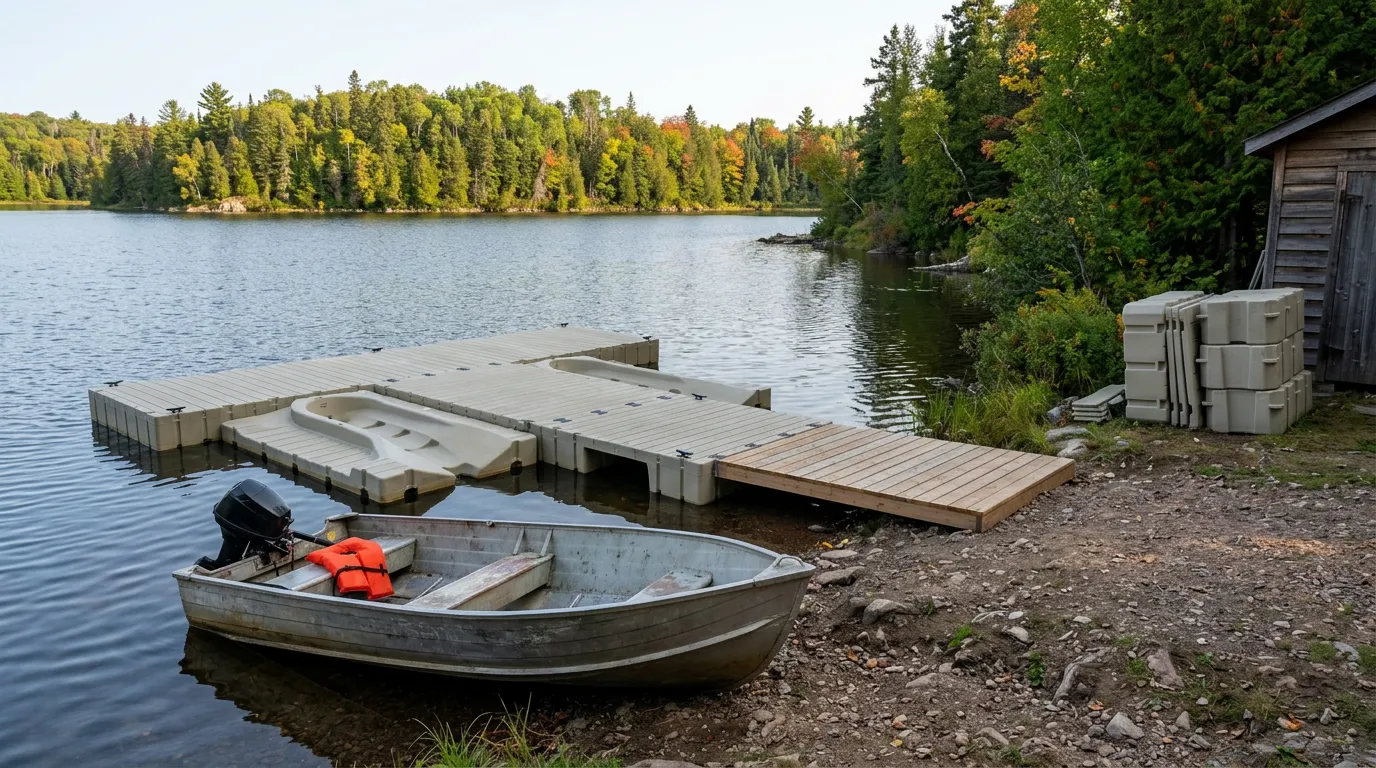
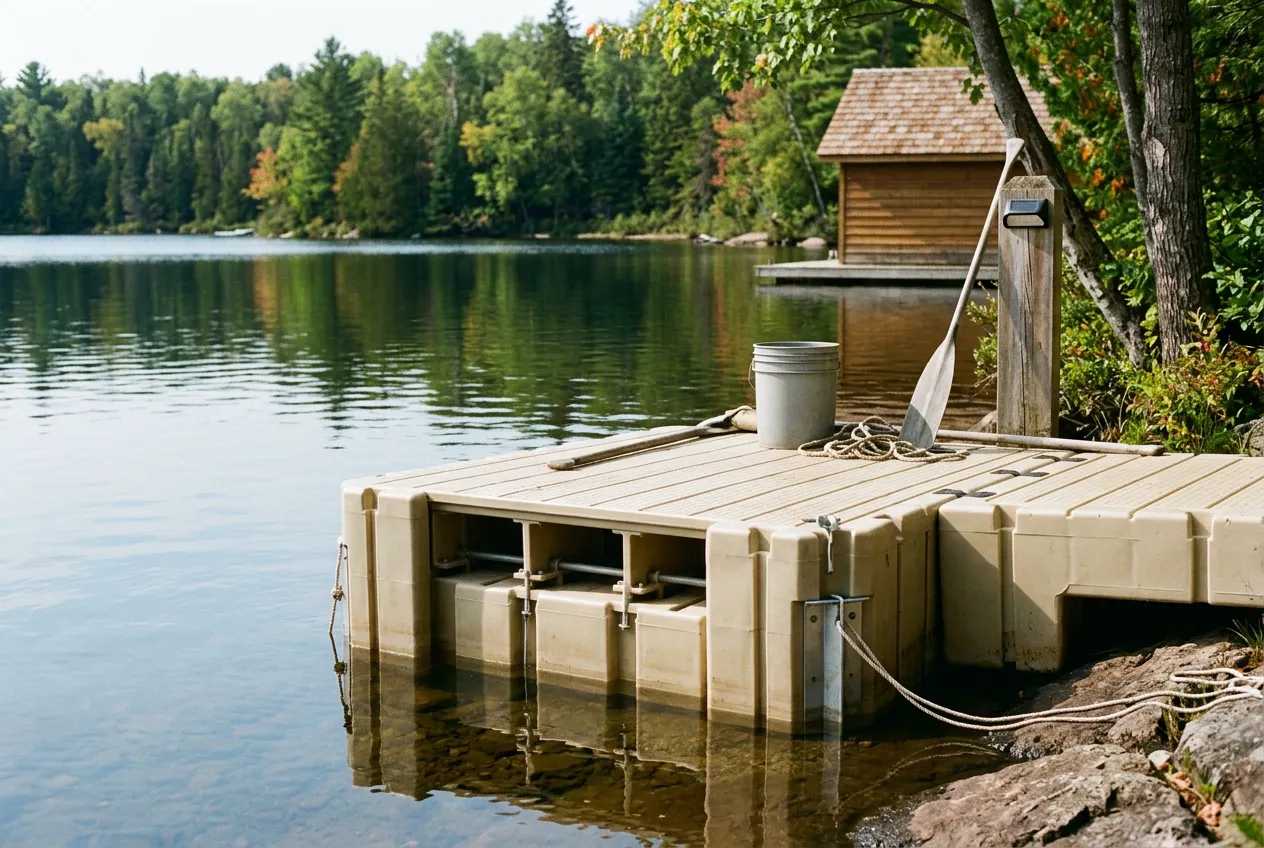
A Wave Armor system is built from modular foam-filled sections that lock together into a dock structure, and it floats on top of the water instead of standing on pilings driven into the lakebed. That one difference in how the dock is supported changes almost everything else about how it behaves through a season, how it handles a rocky or uneven shoreline, and how much work it takes to get it in and out of the water. In this article I want to walk through how the modular construction works, why floating beats fixed in a lot of the conditions we see around here, and where a system like this actually makes sense. For anyone comparing options beyond Wave Armor, our full range of dock systems covers fixed and floating builds side by side.
None of what follows is a case for floating over fixed in every situation. A fixed dock still has its place. What I want to give here is a straight explanation of how a Wave Armor system is put together and why it behaves the way it does, so anyone comparing dock types has the real mechanics in front of them instead of a brochure line.
format_quote
“We built this business on one idea: if we take care of people honestly, they will keep coming back. That is not a marketing line. That is how we run the shop every single day.”
CD
Casey Davieaux
Owner, Reyco Marine & Small Engine Ltd.
Who This Article Is For
Anyone interested in boats, motors, or outdoor power equipment
Northern Ontario homeowners and outdoor enthusiasts
People comparing products or planning a purchase
What Makes a Wave Armor Floating Dock Different
The first thing I explain to anyone looking at a Wave Armor system for the first time is that it isn’t a smaller or lighter version of a fixed dock. It’s a completely different approach to how a dock stays up and how it’s built in the first place. A traditional stationary dock gets its stability from posts driven into the lakebed or from a crib structure sitting on the bottom, and the deck surface is fixed at a set height above the water no matter what the water is doing underneath it. A Wave Armor dock gets its stability from buoyancy instead, built out of individual sections that lock together into whatever footprint a shoreline actually needs. That difference in approach is what drives almost every other advantage and trade-off I’ll walk through in this article.
Foam-Filled Modular Sections
Each section of a Wave Armor dock is a rotationally moulded shell filled with foam, which is what gives the dock its buoyancy without relying on hollow air chambers that can take on water if a shell ever gets damaged. The foam fill means a single cracked or punctured section still floats and still supports weight, rather than turning into a leak that slowly sinks part of the dock. That’s a meaningful difference from a fixed dock, where a single failed support can mean the whole structure needs attention before anyone should be walking on it again.
The sections themselves come in a set of standard shapes and sizes, built to interlock with each other along their edges. Decking gets fastened on top of the assembled float base, so the buoyant structure and the walking surface are really two separate layers doing two separate jobs. That separation matters because it means the decking can be swapped or upgraded later without touching the float sections underneath it, and a damaged float section can be swapped without tearing up the deck surface above it. I’ve seen plenty of fixed docks where a single rotted stringer means pulling up half the decking to get at it. A modular float system doesn’t have that problem.
Connecting Sections Into a Full Dock
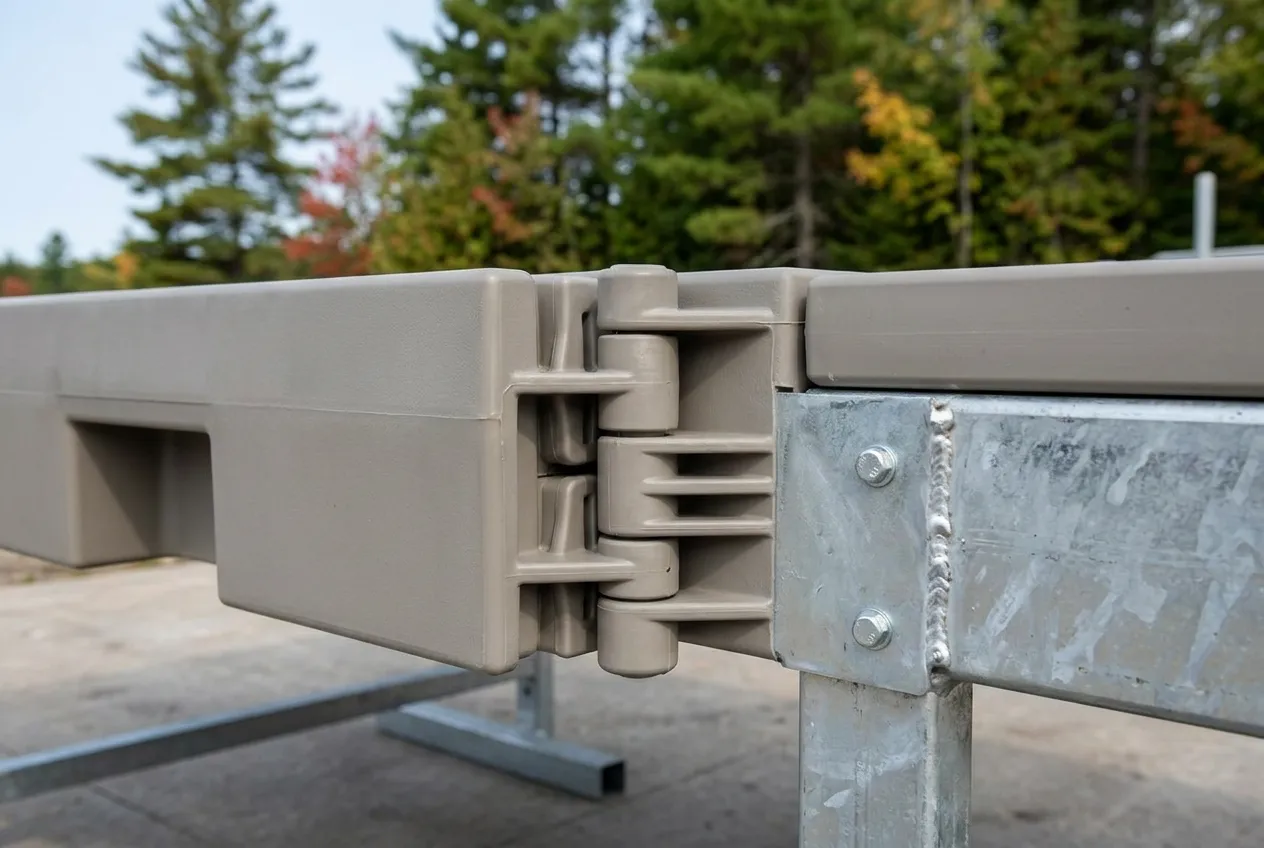
The sections connect to each other using hardware built specifically for that purpose, pins or connectors that pull adjoining sections tight against each other so the finished dock moves and flexes as one structure rather than as a collection of separate pieces knocking against each other. Done properly, the seams between sections aren’t a weak point. They’re actually part of what lets the whole dock flex slightly with wave action instead of fighting it rigidly the way a fixed structure does.
That connection system is also what makes the modular approach genuinely modular in practice, not just in the sales brochure. Sections can be added to extend a dock, removed to shorten it, or reconfigured into a different shape entirely, all using the same connection hardware the dock shipped with. I walk people through this because it’s the part that’s easy to underestimate from a photo. A finished Wave Armor dock looks like one continuous surface, but underneath that decking it’s built from repeatable units that were designed from the start to be taken apart and put back together in a different arrangement.
Why Floating Beats Fixed on a Northern Ontario Shoreline
This is usually the part of the conversation people actually came in for, because ice is the thing that wrecks docks around here more than anything else. A fixed dock built on pilings has to survive ice forming around those pilings every winter, expanding, and putting lateral force on them year after year. A floating dock doesn’t eliminate the need to think about ice, but it changes the relationship between the dock and the ice in a way that matters a lot over the life of the structure. The same buoyant design that lets a Wave Armor dock ride up and down with the water also changes how it needs to be handled once the lake starts freezing, and it’s worth understanding both halves of that before deciding what fits a given shoreline.
The Frost Heave Problem With Fixed Pilings
Pilings driven into a lakebed are exactly the kind of fixed point that ice loves to grab onto. As ice forms around a piling and then expands, it grips the post and, over repeated freeze-thaw cycles, can gradually heave that piling up and out of position. It’s a slow process, often not obvious in any single winter, but it adds up over the years a fixed dock sits in the same spot. Straightening or replacing heaved pilings is real work, and it’s the kind of maintenance that fixed dock owners end up budgeting for eventually, whether they expected to or not.
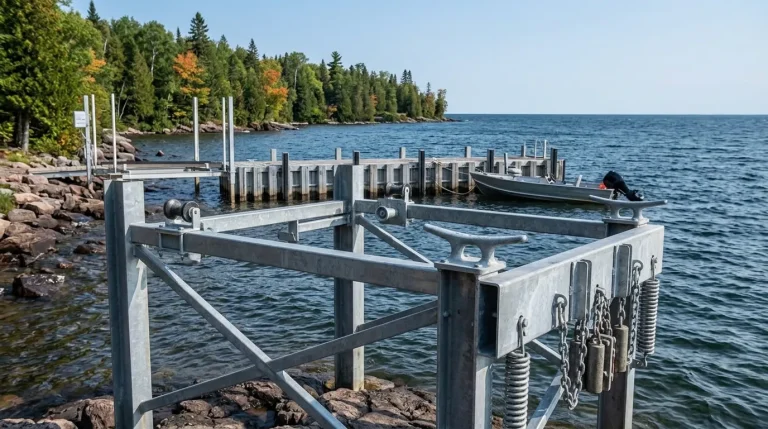
A floating dock system doesn’t have pilings driven into the lakebed carrying that same structural role. Where a floating system does use anchor poles or cables to hold its position, those anchors aren’t supporting the dock’s weight the way a piling supports a fixed structure, they’re just keeping it from drifting while it rides freely up and down. That’s a fundamentally different relationship with the ice, because there’s no rigid post for the ice to grip and lever against the way it can with a driven piling.
Riding Out Water Level Changes
Lake levels around here move more through a season than people expect, between spring runoff, summer drawdown, and everything a wet or dry year does on top of that. A fixed dock is built at one height, and when the water moves away from that height, the dock either ends up awkwardly high above the waterline or, in the other direction, partly underwater. Neither situation is good for boarding a boat safely or for the structure itself over time.
A floating dock rides on the surface of the water, so it moves with the lake instead of staying fixed against it. High water and low water both just mean the dock sits at a different absolute height while the actual step down from the deck to the water stays roughly the same. That’s a real practical advantage on any shoreline where water levels swing meaningfully through the season, and it’s one of the first things I point out to anyone who’s dealt with a fixed dock that turned into a climb down a ladder every time the lake dropped in August.
payments
Monthly Payments That Make Sense
Flexible marine and equipment financing from 60 to 180 months.
Because the whole system is built from interlocking sections instead of a single fixed frame, the layout of a Wave Armor dock isn’t locked in the way a built-in-place fixed dock’s footprint is. That flexibility shows up in two ways: what shape a first installation can take to suit a particular shoreline, and how easily that shape can change later if what someone needs from their dock changes. I spend a fair amount of time with customers sketching out shoreline shapes and figuring out what layout actually solves their problem, because the honest answer to what configuration works best is almost always specific to the property, not a single recommended default.
Straight Runs, L-Shapes, and Boat Slips
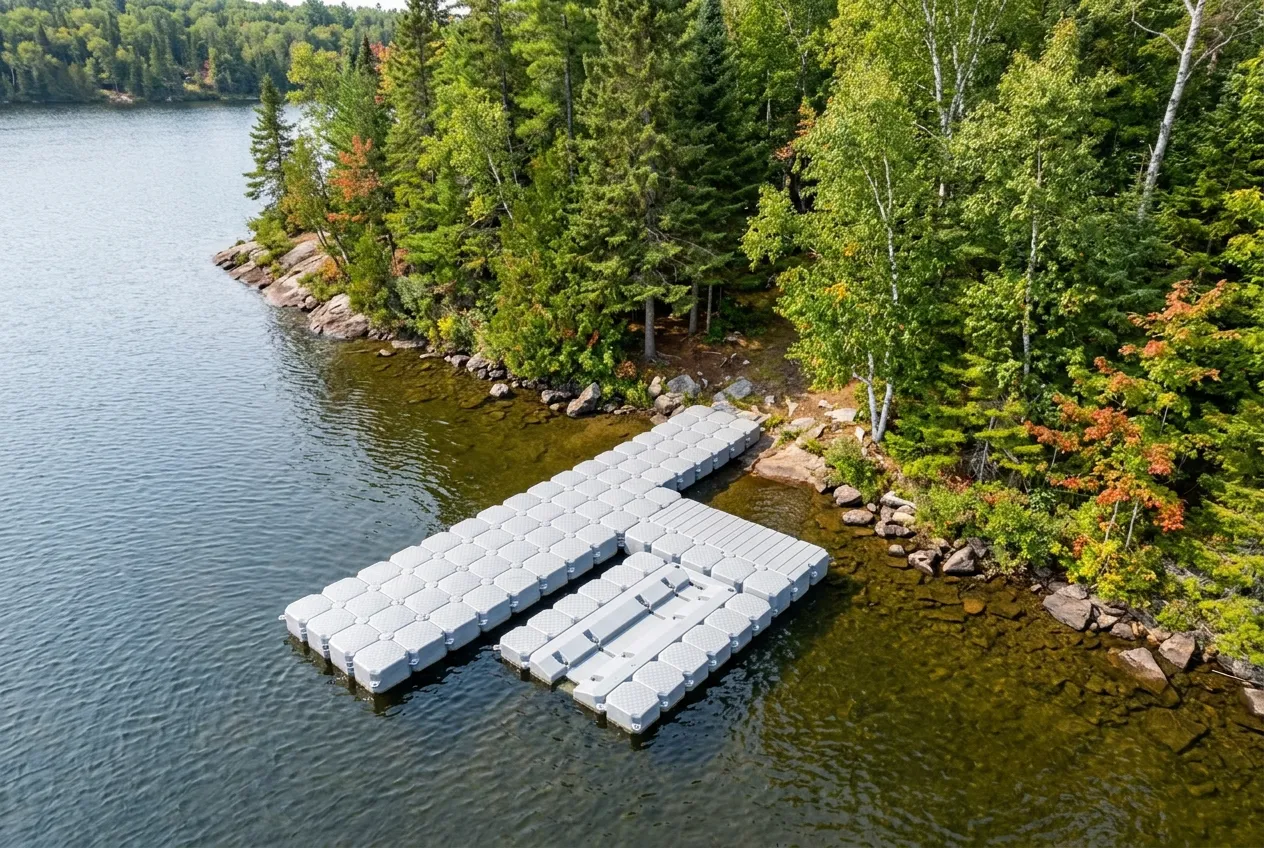
A straight run off the shoreline is the simplest layout and works well when the goal is just a stable platform to get from land onto a boat or into the water. Once there’s a boat involved that needs somewhere to sit rather than just a place to board from, an L-shape or a U-shaped slip configuration lets the dock wrap around the boat and protect it from wave action on more than one side. A T-shape splits the difference, giving a wider platform out at the end for swimming, fishing, or just standing around, while keeping a narrower walkway connecting it back to shore.
Because all of these layouts are built from the same interlocking sections, the decision isn’t locked in before installation the way it would be with a fixed dock that has to be engineered and built for one specific shape from the start. I walk the shoreline with a customer, talk about how they actually plan to use the dock, whether there’s a boat involved and what size it is, and the layout comes out of that conversation rather than off a fixed menu of options.
Expanding or Reconfiguring Later
Needs on a shoreline change. A dock that made sense for a canoe and some swimming five years ago might need to accommodate a pontoon boat now, or a family that used to visit for a week at a time might be there all summer and want more usable space on the water. Because a Wave Armor system is built from sections that connect and disconnect using the same hardware they shipped with, adding on to an existing dock doesn’t mean tearing out what’s already there and starting over.
That’s a genuine advantage over a fixed dock, where extending the structure usually means a fresh build project with its own pilings, framing, and decking tied into what already exists. With a floating system, new sections get added to the existing layout, connected with the same pins and hardware holding the rest of the dock together, and the whole thing keeps working as one structure. I’ve had customers add a slip section years after their original installation once they finally bought the boat they’d been talking about the whole time, and the process is a lot more straightforward than starting a new dock project from scratch.
campaign
Don't Miss New Arrivals
Seasonal deals, new inventory, and maintenance tips. No spam.
Where a Floating System Makes the Most Sense
I don’t try to talk every customer into a floating dock over a fixed one, because there are real situations where a fixed structure is still the better fit. What I can do is explain the conditions where a Wave Armor system genuinely solves a problem that a fixed dock struggles with, based on what I actually see come through the shop and out to shorelines around here. Two situations come up more than any others: shorelines where driving pilings isn’t practical in the first place, and properties where the dock needs to come out of the water every winter without a major production. Our docks buying guide walks through more of these shoreline-by-shoreline trade-offs for anyone still deciding.
Rocky, Soft, or Uneven Lakebeds
A lot of Northern Ontario shoreline isn’t cooperative ground for driving pilings. Bedrock close to the surface makes it difficult or impossible to sink a post to a stable depth, and a soft, mucky bottom on the other end of the spectrum doesn’t hold a piling securely either. A floating dock sidesteps that problem entirely, since it doesn’t need the lakebed to support its weight in the first place. Anchoring still has to account for the bottom conditions, but the demands on that anchoring system are a lot lighter than what a load-bearing piling foundation requires.
This comes up constantly with waterfront properties that have been stuck with an awkward, undersized dock for years because the shoreline never suited a proper fixed installation. A modular floating system that doesn’t care what the bottom is made of opens up a real dock option on a shoreline that was never going to support one built the traditional way.
Seasonal Installation and Removal
Around here, pulling a dock out for the winter isn’t optional, ice will eventually take apart anything left sitting in the water through freeze-up. A fixed dock built on pilings usually means the decking comes off and the pilings stay in, exposed to exactly the frost heave process described earlier. A Wave Armor system comes out as a whole assembled unit, or in manageable sections, without needing to disassemble a structural frame each fall and rebuild it again every spring.
For a lot of the seasonal cottage owners I deal with, that difference in fall and spring labour is a real factor, not a minor convenience. A dock that goes in and comes out in an afternoon instead of a weekend changes how much dread there is around two jobs that have to happen every single year without fail. It’s one of the more practical reasons I hear from customers who’ve made the switch after years of fighting a fixed dock every October.
swap_horiz
Your Old Equipment Has Value
We accept trade-ins on boats, motors, trailers, and outdoor power equipment.
Anyone weighing a Wave Armor floating dock against replacing or repairing a fixed dock is welcome to come talk it through, the shoreline conditions, the water level swings, and how the dock actually gets used day to day. Reyco Marine stocks Wave Armor dock systems, and I’m glad to walk through layout options and what an install actually involves before anyone commits to anything. Give us a call at 705-253-7828 or stop by at 11 White Oak Drive East, Sault Ste. Marie, P6B 4J7.
format_quote
“We built this business on one idea: if we take care of people honestly, they will keep coming back. That is not a marketing line. That is how we run the shop every single day.”
CD
Casey Davieaux
Owner, Reyco Marine & Small Engine Ltd.
Bottom Line
A Wave Armor dock solves the ice and water level problems that come with a fixed, piling-built dock by changing how the whole structure is supported in the first place. Buoyant, foam-filled sections ride with the water instead of fighting it, connect together into whatever layout a shoreline actually calls for, and come apart again each fall without the frost heave and rebuild cycle that a fixed dock goes through year after year.
It isn’t the right answer for every shoreline, but on a lot of Northern Ontario waterfront, especially where the lakebed doesn’t cooperate with driving pilings or where water levels move a lot through the season, it solves problems a fixed dock structurally can’t. That’s the honest case for it, not a sales pitch, just how the two approaches actually behave once winter and a few seasons of use are part of the picture.