TL;DR Lee here. I get a version of the same question from parents almost every week once the weather turns, which is some version of...
group
Who This Article Is For
check_circleAnyone interested in boats, motors, or outdoor power equipment
check_circleNorthern Ontario homeowners and outdoor enthusiasts
check_circlePeople comparing products or planning a purchase
TL;DR
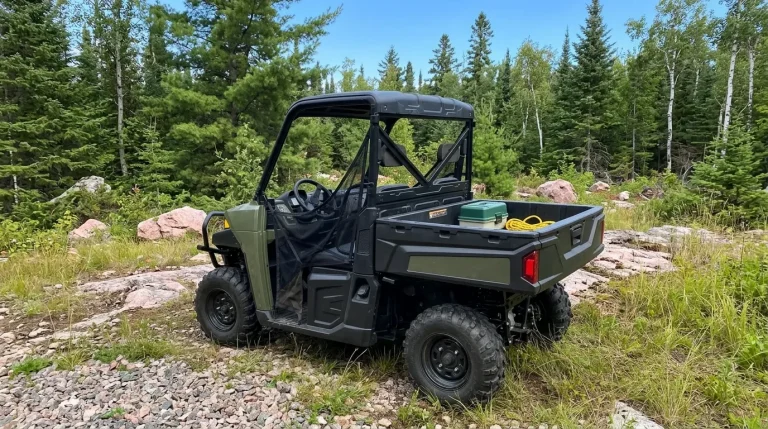
Lee here. I get a version of the same question from parents almost every week once the weather turns, which is some version of “what do I actually need to check before I let my kid ride this thing.” So I put together the checklist I actually walk families through at the counter, covering helmet and harness fit, why the speed limiter setting matters more than the machine’s spec sheet, how to think about supervision as experience changes rather than just age, reading trail conditions with a beginner’s judgment in mind, and the walk-around I’d want a parent doing before every single ride, not just the first one. If your family is newer to ATVs altogether, our new ATV owner checklist for Ontario families covers the broader basics before you get into anything youth-specific.
None of this is about which youth ATV or UTV to buy. It’s about what to check and what habits to build once one is already in the garage. My honest take is that most of the risk on a youth machine isn’t the machine itself, it’s a gap somewhere in fit, setup, or supervision that nobody thought to check because the ride “always goes fine.”
format_quote
“We built this business on one idea: if we take care of people honestly, they will keep coming back. That is not a marketing line. That is how we run the shop every single day.”
CD
Casey Davieaux
Owner, Reyco Marine & Small Engine Ltd.
Who This Article Is For
Anyone interested in boats, motors, or outdoor power equipment
Northern Ontario homeowners and outdoor enthusiasts
Parents and guardians of young or new riders
Getting the Fit Right Before Anyone Straps In
Before I get into supervision or trail conditions, I want to start with the two pieces of gear that do the actual work if something goes wrong: the helmet and the harness. A perfectly good helmet sitting loose on a kid’s head, or a harness adjusted for an adult torso, isn’t doing the job it’s there for, and I see both more often than I’d like when a family brings a machine in for something unrelated.
My honest take is that fit gets treated as a one-time setup step when it should really be checked every season, sometimes more often than that, because kids grow fast enough that a helmet or harness dialled in properly in the spring can be noticeably off by the fall.
A Helmet That Actually Fits a Smaller Head
A youth helmet needs to sit level on the head, snug enough that it doesn’t shift when you tug on it from the sides or the back, with the chin strap tight enough that only a finger or two fits between the strap and the jaw. If the helmet rocks forward and drops over the eyes, or rocks back and exposes the forehead, it’s not the right size for that rider regardless of what size the box said. Youth-specific helmets exist for a reason. An adult helmet padded out with extra foam to fit a smaller head is not the same as a shell actually sized and rated for a lighter, smaller rider, and I’d rather steer a family toward a properly sized youth helmet than toward padding out a bigger one.
I also tell parents to recheck fit at the start of every riding season, not just when the helmet is new. A season of growth, or even a haircut, can change how a helmet sits, and a quick fit check takes less time than the ride itself.
Harness and Seat Belt Habits Worth Building Early
A four or five-point harness needs the shoulder straps sitting flat across the collarbone, not up near the neck or drooping off the shoulder, and the lap belt low across the hips rather than riding up over the stomach. On a machine built for adults, a smaller rider can end up with slack in the harness that a taller rider wouldn’t have, so it’s worth actually checking the fit on the specific rider rather than assuming the factory adjustment covers everyone.
The habit that matters more than any single adjustment is treating the harness as non-negotiable, every ride, no exceptions, including the short trip around the yard that “doesn’t really count.” Riding gear matters most in exactly the situations nobody plans for, which is part of why I’d rather see a family build the harness habit early than rely on remembering it under pressure later.
Fit is only part of the picture. The other half is making sure the machine itself is set up for the rider actually driving it, not for the rider it might grow into over the next couple of seasons. This is where the speed limiter, sometimes called a governor, does most of the real safety work on a youth machine.
I’ll say up front that I’m not going to quote a specific number here, because settings vary by model and by manufacturer, and the right approach is always to check the owner’s manual for that specific machine rather than assume a number from a different model applies. What I can speak to is the general principle behind it.
Why the Governor Setting Matters More Than the Spec Sheet
A youth UTV’s top speed on paper matters a lot less than what it’s actually limited to for that rider. Most youth-oriented machines ship with some form of adjustable speed limiter, and the whole point of it is to let the machine grow with the rider’s skill instead of handing a beginner full throttle on day one. I always tell parents to start conservative, confirm the setting against the owner’s manual rather than guessing, and treat any increase as something earned through demonstrated control, not something scheduled by the calendar.
It’s also worth checking that setting periodically rather than assuming it stays where it was set. A limiter that gets adjusted, reset, or bypassed, intentionally or not, is one of the quieter ways a young rider ends up with more machine than their experience is ready for.
Growing Into a Machine Instead of Just Growing Into the Seat
There’s a difference between a rider who’s grown enough to reach the pedals and controls properly and a rider who’s actually built the judgment to handle more speed and less structure. I’d rather see a family hold a speed setting steady for a season longer than move it up because the rider physically fits the machine better now. Physical fit and riding judgment don’t grow at the same rate, and the governor setting should track judgment, not height.
The same logic applies to moving a rider up to a bigger machine entirely. A youth UTV that’s genuinely too small for a growing rider is a real reason to size up, and that’s when it’s worth browsing our full range of ATVs for the next machine. A rider who’s simply gotten confident on the current machine isn’t automatically ready for more speed or a bigger machine, and those two situations get mixed up more often than I’d expect.
payments
Monthly Payments That Make Sense
Flexible marine and equipment financing from 60 to 180 months.
Supervision That Matches Real Experience, Not Just Age
Age is an easy number to anchor a rule to, but it’s a poor stand-in for how ready a specific rider actually is. I’ve seen a confident, careful eight-year-old handle a familiar trail better than a distracted, impatient twelve-year-old, and supervision decisions work better when they’re based on what I’ve actually watched a rider do than on a birthday.
My honest take is that supervision isn’t a switch that flips from “watched constantly” to “rides alone.” It’s a gradient, and most families do better treating it that way.
What Direct Supervision Actually Looks Like
For a new or young rider, direct supervision means an adult within sight and within calling distance the entire time, riding alongside or immediately behind on a separate machine, or walking the route on foot for very short, low-speed sessions. It doesn’t mean being generally aware that riding is happening somewhere on the property while doing something else nearby. A rider who’s still learning throttle control, braking distance, or how the machine handles on loose gravel needs someone close enough to intervene immediately, not someone close enough to hear if something goes wrong.
I also tell parents that direct supervision on a familiar, flat, open area still counts as direct supervision. It’s not just for unfamiliar terrain. New riders make small, correctable mistakes constantly in the early stages, and those are exactly the mistakes supervision is there to catch before they become bigger ones.
Signs a Young Rider Is Ready for a Little More Rope
Loosening supervision to something less than constant, in line-of-sight range on a known, low-risk route rather than side by side, is reasonable once a rider has shown consistent, repeatable control across multiple sessions, not just one good ride. I look for things like smooth, predictable braking, staying at the set speed limit without needing a reminder, and good judgment around obstacles and other people on the trail.
Even once supervision loosens, I’d keep a few things constant regardless of how experienced a young rider seems: a known route the rider has ridden before, a way to reach the rider or have the rider reach an adult if something happens, and a clear boundary on how far the rider can go before turning back. Confidence on a familiar loop doesn’t automatically transfer to a new trail or different conditions, so those boundaries are worth re-establishing any time the situation changes rather than assuming earned trust carries over automatically.
A simple check-in habit does a lot of work here too. Something as basic as a planned turnaround time, or a rule that the rider stops at a specific landmark and waits if an adult isn’t already visible, gives structure to supervision that’s loosened without going back to riding side by side the whole time. I’d also treat any change in the group riding, a friend joining, a sibling tagging along on a separate machine, as a reason to tighten supervision back up temporarily rather than assume the same looser rules still apply. Group riding changes the dynamic more than most families expect, since a young rider’s attention naturally splits between the trail and whoever else is out there with them.
campaign
Don't Miss New Arrivals
Seasonal deals, new inventory, and maintenance tips. No spam.
Reading the Trail Before the Rider Has To
Northern Ontario terrain changes fast, sometimes within the same ride, and a big part of keeping a young rider safe is making the terrain and conditions call before the ride starts rather than leaving a beginner to figure it out on the fly. This is a judgment call I’d rather make myself, or make together with the rider, than hand entirely to a young rider still building that judgment.
Terrain That Belongs to More Experienced Riders Only
Steep grades, loose gravel or shale, water crossings, and trails with blind corners or heavy brush close to the path are all terrain features I’d keep off a young or new rider’s route regardless of how well they’ve handled easier trails. These features ask for reactions and judgment that come from experience, and experience is exactly what a new rider hasn’t built yet. A flat, wide, well-maintained trail or an open field is a much better training ground, and there’s no rush to move past that stage before the rider is genuinely ready.
It’s also worth remembering that a trail a young rider handled fine last season isn’t automatically the same trail this season. Erosion, deadfall, and changes in trail maintenance can turn a familiar route into something noticeably more demanding without any obvious warning sign until the rider is already on it.
I’d also walk or drive a route myself before sending a young rider out on it for the first time, rather than relying on someone else’s description of how the trail rides. A trail that sounds easy secondhand can have a washout, a soft shoulder, or a blind rise that only shows up once you’re actually on it, and a few minutes checking it in person is a small cost compared to a young rider discovering a surprise obstacle alone.
Weather and Seasonal Conditions Unique to Northern Ontario
Rain, mud, and early or late-season frost change how a machine handles more than most new riders expect, and a young rider’s instinct in those conditions usually isn’t there yet. Wet roots and rocks can be as slick as ice, standing water can hide a rut or a soft shoulder, and shortened daylight in the fall means a ride that started in good light can end in poor visibility faster than planned. I’d treat any of those conditions as a reason to shorten the ride, tighten supervision, or wait for better conditions entirely, rather than push through on a schedule.
Bug season and wildlife activity are worth a mention too, since a startled rider reacting suddenly to a bee or an animal crossing the trail is a real, ordinary hazard that has nothing to do with skill level. It’s less about avoiding it entirely and more about riding at a speed where a sudden reaction doesn’t turn into a loss of control.
swap_horiz
Your Old Equipment Has Value
We accept trade-ins on boats, motors, trailers, and outdoor power equipment.
The last piece of the checklist is the one I think gets skipped most often, mostly because it feels unnecessary on a machine that “was fine last time.” A quick walk-around before every ride, not just the first ride of the season, catches the small things that turn into real problems once the machine is moving.
Tires, Brakes, and the Things That Fail Quietly
Tire pressure and tread condition are worth a quick look every time, since a soft tire changes how the machine handles and how far it takes to stop, and a worn tread does the same on loose or wet surfaces. Brakes deserve an actual test, not just a glance, pressing the pedal or lever before setting off to confirm it feels firm and consistent rather than soft or delayed. These are the kinds of things that fail quietly, a slow leak, brake pads wearing down gradually, and they’re much easier to catch with a thirty-second check than to diagnose after something’s already gone wrong on the trail.
I’d also check that the parking brake actually holds, especially on any property with a slope near where the machine is stored or loaded, since a parking brake that’s marginal is easy to miss until the one time it matters.
Fluids, Lights, and the Kill Switch
A quick look at oil level and coolant, if the machine has it, along with checking that lights and any safety flag are working if the ride will run into low light, rounds out the mechanical side of the walk-around. The other check I’d never skip is the kill switch, sometimes tethered to the rider with a lanyard on smaller machines, confirming it actually cuts the engine when pulled or pressed rather than assuming it works because it did last season.
None of this takes long once it’s a habit. The families I see get the most consistent good results are the ones who’ve made the walk-around as automatic as putting the helmet on, not something reserved for the first ride of spring. I’d also keep the walk-around itself simple and repeatable rather than treating it as a full mechanical inspection every time, since a check that feels like a chore is one that eventually gets skipped. A short, consistent routine that actually happens beats a thorough one that only gets done occasionally.
format_quote
“We built this business on one idea: if we take care of people honestly, they will keep coming back. That is not a marketing line. That is how we run the shop every single day.”
CD
Casey Davieaux
Owner, Reyco Marine & Small Engine Ltd.
Need Professional Service?
If you want a second set of eyes on a youth machine’s speed limiter setting, brakes, or general condition before the season gets going, bring it by and I’ll walk through it with you. I’m also happy to talk through fit and setup questions over the phone if you’re not sure whether a harness or helmet is sized right for your rider.
You can reach us at 705-253-7828, or stop by in person at 11 White Oak Drive East, Sault Ste. Marie, P6B 4J7. Bring the machine in and I’ll go through the checklist with you directly.
build
Need Professional Service?
Factory-certified technicians. Same-week appointments. We service all brands.
Most of what keeps a young rider safe on a UTV isn’t the machine, it’s the fit, the setup, and the habits built around it. A helmet and harness that actually fit, a speed limiter set to match judgment rather than height, supervision that tracks real experience instead of a birthday, honest terrain and weather calls, and a pre-ride walk-around done every time, not just the first time, cover most of what I’d want checked before I let a young rider head out. None of it takes long once it’s routine, and that routine is what actually does the work.